Monday, 29 August 2022

Elderberry Cordial

We love a little warm beverage in the evening during the winter, and these bottles will be stashed away till then.
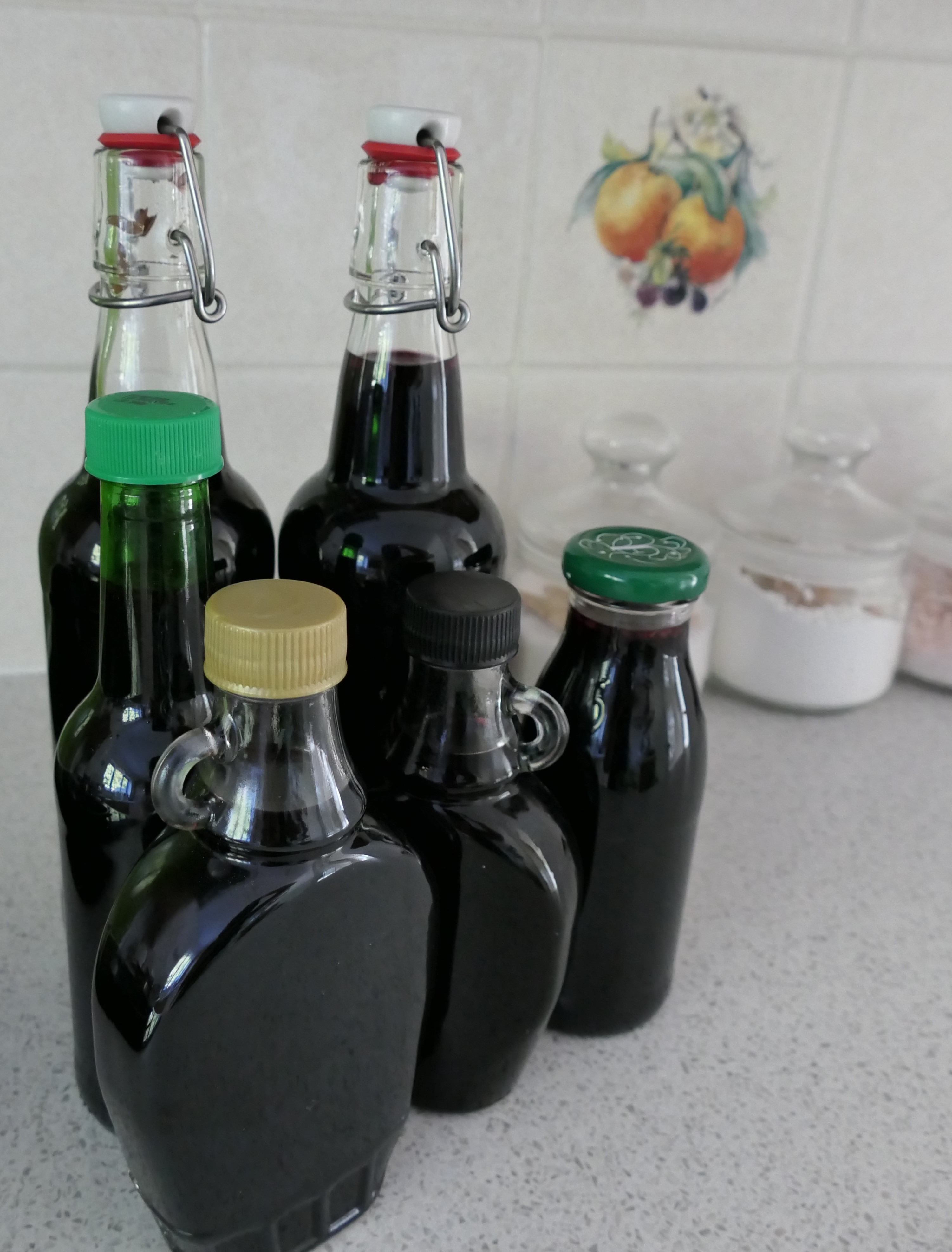


After sharing my recipe with some friends and hearing about all the health benefits of Elderberries, a fine stand of plump black elderberries yielded sufficient for my little stash of winter elderberry syrup.  


Lee Hooker wrote the following which I am including in its entirety.

ELDERBERRY CORDIAL


When elderberries are at their lusciously dark, glossy best they are irresistible, the only tricky bit is deciding what to make with this foraged bounty, will it be jams, jellies, syrups, cordials or wine?


Mary Poppins advice that ‘a spoonful of sugar helps the medicine go down’ was very much in mind as we picked the first batch of this year’s harvest specifically for medicinal rather than culinary use. Sambucol* Black cordial has a long and impressive history of boosting immunity against ‘flu and respiratory disease thanks to its antioxidant and antiviral properties. [*Sambucus translates as ‘gift of the gods’]. Whilst on the linguistics theme, Cordial derives from Medieval Latin, Cordialis meaning ‘heartfelt’.


Since the arrival of novel Covid-19 disease, described by Dr Chris Whitty as a mild seasonal ‘flu, interest has increased in using herbal remedies in preference to pharmaceutical or mechanical interventions. This significant shift has been endorsed by the NHS Foundation Trust at East Kent who trialled this remedy as a treatment for Covid-19 because of its immune-boosting reputation.


Our immune systems benefit from extra amounts of the flavonoid Quercetin taken with Zinc. Together they act as an anti-thrombotic needed to regulate adaptive immune cell functions. Plant polyphenols with this flavonoid have the ability to inhibit viral replication at various stages in respiratory diseases such as influenza. Published research articles record its role in inhibiting cellular entry of SARS -CoV-2 and reducing upper respiratory symptoms but there is a caution to heed, elderberries are toxic if consumed raw, they contain sambunigrin but cooking eliminates these cyanogenic glycosides.


Israeli virologist, Dr. Madeleine Mumcuoglu, of Hadassah-Hebrew University, found that elderberry disarms the enzyme viruses use to penetrate healthy cells in the lining of the nose and throat. Taken before infection, it prevents infection. Taken after infection, it prevents spread of the virus through the respiratory tract. In a clinical trial, 93.3% of study subjects claimed complete cure or significant improvement within 2-3 days. In contrast, subjects receiving the placebo required 6 days or more to recover.


ELDERBERRY CORDIAL RECIPE
[adapted from Noelle’s and others]


Fresh ‘black’ European elderberries

Granulated Sugar [sufficient for preserving shelf-life]

Cloves and other spicy additions [see List below]

Water


VARIANTS LIST

Sumac [added to cold infusions for high Vit C content]

Dried echinacea root [immune stimulant]

Dried ginseng root [immune stimulant]

Allspice, Fennel seeds, Cinnamon sticks, Nutmeg, Ginger


 Pick berries that are glossy, almost black, reject red and green berries.

     Strip the berries from their stalks with a fork or by hand. I prefer hand-stripping for quality control. [stalked berries can be frozen which makes stripping them extremely easy]

     Wash the berries, unripe ones tend to float to the top along with stray stems and perhaps insects.

     Skim these off, drain, re-wash.

     Put berries in a preserving or thick-based pan with enough water to just cover them 

     Gently mash the berries with a potato masher to release their juice whilst simmering on low heat for 20 minutes

         Strain the elderberry mixture through a muslin-lined sieve/straining bag into a jug or separate pan, squeeze the muslin to extract all the juice

         For each pint of juice, add 1lb of sugar and 12 cloves [optional Variants list below] I add the juice and rind of two small oranges, one lemon, 2 cinnamon sticks, all spice and fennel seeds

         Boil the mixture for 10 minutes until it starts to thicken [add citrus juice if necessary]

         Allow the mixture to cool. Strain it again through muslin sieve to achieve a smooth syrupy liquid, pour into sterilised bottles, add more cloves if desired  then top up with brandy or cherry liqueur to further extend and preserve its shelf life [up to two years if kept in a cool, dark place]


If you over-boiled the syrup and invented elderberry toffee along the way, well done, have some apples on sticks ready to hand!

 We just celebrated a house purchase with a glass of Kir Royale made with champagne and our newly-bottled elderberry syrup, the ultimate health tonic. The cordial is also delicious poured over buttermilk soft pancakes and waffles. Next to try on the culinary list is Elderberry panna cotta which substitutes elderberry cordial for the sweet element in recipes.

Thank you Noelle for suggesting All spice, fennel seeds, cinnamon sticks, all of which went into my Elderberry cordials. We’re about to forage our garden for our third batch of elderberries for cordials and will keep going through September until nature closes the supply.


In a Vase on Monday - Sea Shells and Oyster Shells

 Of Sea Shells and Oyster Shells....

Script above ' Lobster'!

One's mind can pleasantly wander and create a posy, bring forward pleasant memories stashed away, which is all part of the slow joy of this weekly meme.  Conceived and hosted by Cathy who also wanders through her garden twice a week for this meme, and also to join in with Six on Saturday hosted by another enthusiast. 

Today is Bank Holiday in the UK , and a leisurely breakfast in the garden justified a 'garden' posy.  Cosmos 'Sea Shells' are the star this week.


Joining the sea shells in the vase are Sedum Bertram Anderson, Dianthus Superbus, Aster King George, and leaves from Centaurea Silver Feather which went spare when I was potting up some cuttings yesterday.

Around the base of the vase are some old Oyster Shells which I picked up from the beach at Mersea Island.  We went there are visiting Beth Chatto's garden last year and spent a couple of delightful hours just walking along the edge and viewing a mini regatta of red sailed barges.  

"Oyster shells had collected in vast quantities on the beach. Found on Thames beaches only as a reminder of 19th century diets, the oyster shells of Mersea were displacing the shingle, forming a protective bulwark around a fragile island. The Romans, arriving in Essex to deal with the Iceni, stayed to fortify Colchester and had laid oyster beds at Mersea, where they liked to come on holiday. Oyster farming rights on Mersea dated back to Edward the Confessor, and shellfish were the fabric of the island." Edge Walking #3 Mersea Island by Tom Bolton

I am a 'gatherer' and here I gathered shells old oyster shells some had pebbles embeded in them, others had smaller oysters growing on them. I place the shells often on the gravel to mark the position of choice bulbs, or place them on the garden to deter the many birds from digging around the patches of cuttings I place directly in the soil.

Saturday, 27 August 2022

Six on Saturday - last one in August

How the month has slipped by so quickly I can't explain.  Wistfully hoping for a good soaking for depite a sharp shower in which I got drenched when I was but a mile from home, here, the garden recovered from its hour of mizzle to end up within a couple of hours as dry as ever. I know it will have rained in other parts, and I look forward to reading Jon's post and those of other gardeners later today and during the week.

Here are my Six on Saturday.

1. How long before it is time to bring the succulents indoors?  Some are now on the shelf with some just on the gravel.


2. Acer Corner and its bed are looking weather worn, with many perennials and the annuals cut back to ground level having withered in the searing heat and drought.


Acer itself has done surprisingly well  considering it has not been watered, but maybe the oak on the other side of the wall has given it some shade and who knows what the underground microfungi are doing?

Right towards the front the Heritage Chrysanthemums Picasso which I am 'holding and expanding' for the HPS too are in full sight now all the cosmos have succumbed. I managed to hand back three good plants early this year, from my original the previous year.


3. We weresitting at the round table in the garden yesterday afternoon, having a cup of tea  my dearly beloved and I spied.  Suddenly I saw an unusual small half slug half caterpillar type creature. One of my pear trees has Pear Slug Sawfly and then I found a lone one on the other tree.  


Using the search term half slug half caterpillar, I was able to identify the culprit/

The larvae are important pests that eat the leaves of commercial crops such as cherry, pear, and plum trees, leaving behind a skeleton of veins. The larvae cover themselves in green slime, making themselves unpalatable to predators. When the larvae are fully grown, they drop off the tree on the ground and pupate underground. The adult sawfly emerges from the pupal case and climbs from the soil to mate and lays eggs on the leaves of the host plant, completing the lifecycle.


When I investigated the other pear tree I found another problem!  Could be Fire Blight?


4. I felt it was time to repot the Trapaeolum tricolor, and when upended the pot there were these three large tubours.  They are in a new pot now, and will be destined for the conservatory when bloom start to appear.


5. With their roots constantly in water, these plants have enjoyed the hot weather. I am on the hunt for a suitable container to accommodate the original large one, and the three smaller ones bought earlier this year.


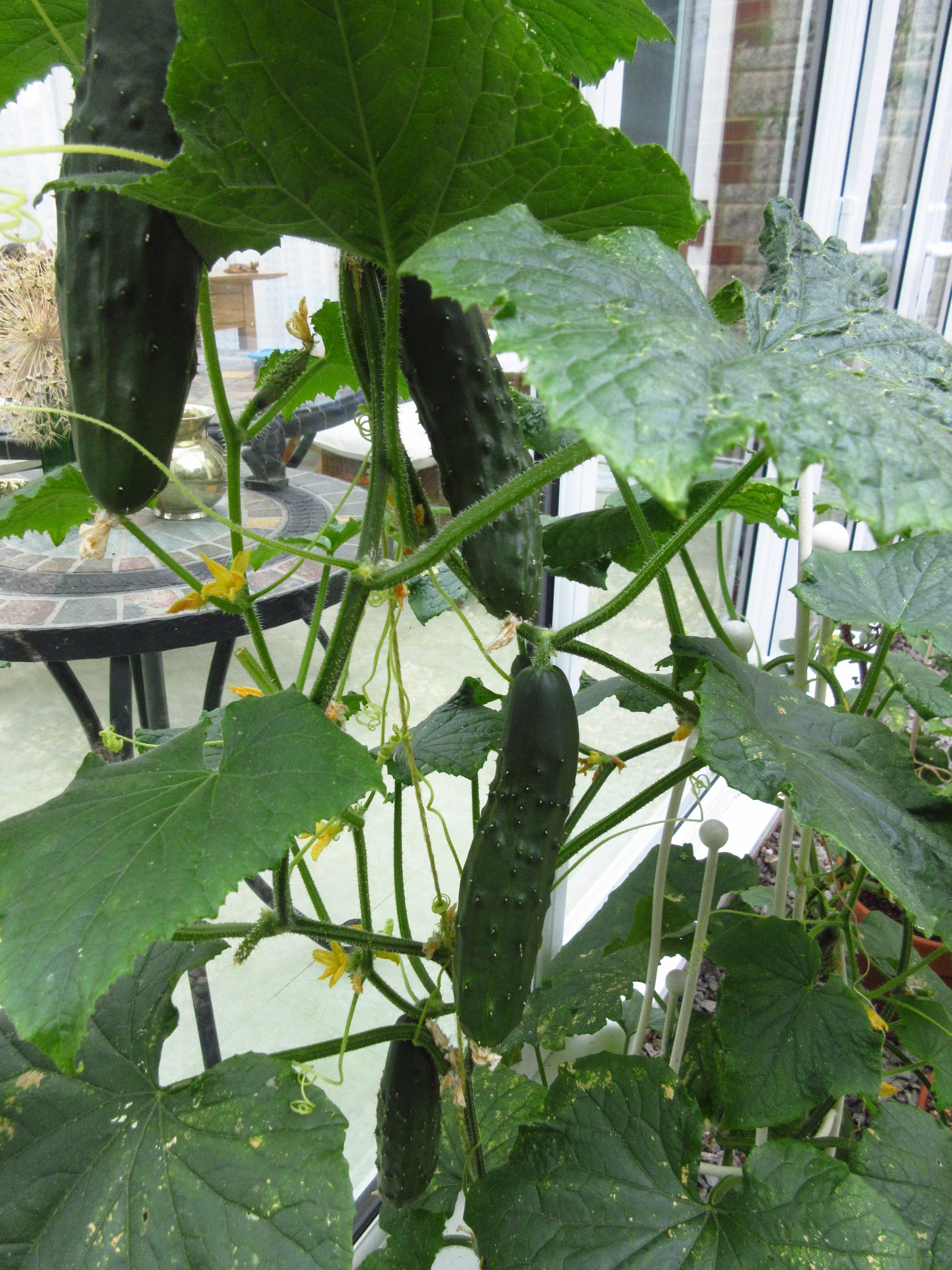
6.  Before the first cucumber plant had tired itself out, or at least looked as if it would stop fruiting, I bought a small plant for £1.50 from the market stall, and by having these plants in succession,  I shall be picking cucumbers from late May going into September.  It is growing outdoors up a string anchored to the outside edge of the conservatory.


Thursday, 25 August 2022

Dinner with Friends

 Last night we had a delightful evening with friends here.  I have days when I am inspired to cook and feel happiest in the kitchen, and yesterday was one of them.  Even before I set off for the market, I knew I wanted to cook a feast to local produce.  

We had enjoyed the bounty from other gardens and had produce in ours too.  Walking along the lanes, we took up offers of tomatoes and apples from two different front garden tables over the last couple of days, just what our hands could hold, leaving plenty for other people.  

We had beetroot and courgettes from our gardens, and tomatillos and white Hungarian peppers dropped round from Tim and Lee's only a few days previously. I dropped them an email early and set off to the market for my weekly local produce, not even knowing whether they were available or canted to come.

I bought a kilo minced meat from Perridge Farm, which is only 4 miles away.  They have a stall in the market and last week we had a steak which was probably one of the best we had had. A couple of excellent cheeses from the Bartlett Brothers again with Wotton Organics being in eye sight of home.

Arriving home, I cooked the mince with my usual mixture of herbs, carrots, celery, onion, tomato passatta, pancetta etc, and all I can say I was spoiled, and for beef, this will be the source for us from now on.  I portion this up and freeze excess to form the basis for future meals.

Then an email accepting the invitation arrived, saying they were vegetarians.  That got my creative energy surging, and with a little inventiveness using store cupboard ingredients, plus pulses ready cooked but frozen, and  quick flip on ideas with quinoa plus a little inventiveness came up with a delicious array for our 'thanksgiving for local produce dinner.'

Menu

Quinoa with our garden courgettes with onion, and chopped salted and spiced cashews.

Roasted front garden stall tomatoes with our garden garlic, and olive oil.,

Roasted tomatilloes from their garden with garlic and olive oil

Baked White Hungarian heritage pepper from Lee and Tim, stuffed with a ragu of black beans, and lentils, onions, marsala infused raisins, spices etc topped with goat's cheese

Our garden beetroot freshly cooked, topped with walnut oil and chopped walnuts

Lee had also brought stuffed peppers with grains and pine nuts topped with pecorino

Desert

Jacket apples, from a front garden table, stuffed with my vintage mincemeat, with lashings of Mr Bird's Sauce first invented in 1837 ably made by Mr S and we had to scramble to find a jug big enough for lashing for 4 people, and the tin of Tate and Lye's Golden Syrup: 70 years Special Edition Tin was also handed round.  

Finally beautifully sun ripened grapes, with a couple of the Bartlette's best chesses, and my freshly made Einkorn Blend, walnut and garden dill seed baguettes. 

Wine brought by our guests, and jar of blackberry jam made just days ago, and this beautiful fasciated Aubergine. Weighing at over 400g, that is my next recipe challenge: Mr S doesn't care for aubergines...but he may yet be charmed!


Conversation was very convivial and free flowing, with titbits brought about such as some rainbow quinoa is being grown at a place not far away close to their village, which means there will be a cycle ride with an aim in view, why Mr Bird invented custard, how we can use tomatillos , etc etc....

A big thank you to Mr S who organised the clear up and washing up and cleaning of the kitchen, without which I would have just gone to bed and not woken up to a lovely clear kitchen, and breakfast already set out in the conservatory this morning.

A lovely day at home with a great end of appreciative dinner guests, one to remember.

Monday, 22 August 2022

In a Vase on Monday - Of Shooting Stars, with Harps and Olives

My sisters and I have had some lovely 'e-communications' this past week that have had us thinking back to our childhoods, with some memories forming the basis of this Week's In a Vase on Monday.

With very few flowers in any reasonable condition and leaves tatty and dry and mostly on the ground, it is time to show this lovely alliumi.  The name Allium carinatum  subs pulchellum ia such a mouthful I call them my shooting stars.


On my Six on Saturday last week, I showed a close up of the flowers in the garden. After guessing at their height in a reply to Anna's comment, I went armed with my tape measure when cutting the blooms in the front garden, and the tallest were around 70 cm.


The leaves are quite desiccated now, and yet the bulb has found some moisture to make the flowers. In normal years it is already growing the new season's leaves at flowering time.  I had the original three or four small seedling bulbs from Alison, and have gradually increased my stock.  It takes three to four years to yield good sized flowers.  I chose the name Shooting stars when I first saw the crazy shapes which probably are more like a little fire work.  My father used to sing 'Catch a Falling Star' to us when we were very little, and I have since found the original sung by Peri Como.

The shells are Olives and Harps: all collected washed up on the beaches. After large cyclones, a little beach combing would yield a harvest, with little arrangements made with seaweed and mostly broken shells and corals on the sand, with maybe only one or two better specimens taken home.  I have a little kilner jar of my objets trouvés which include these beach finds.

This weekly meme links up with others under Cathy's post.