Friday, 9 April 2021

Echeveria Purple Pearl from leaf to flower in four years

 After setting a few leaves of my Echeveria Purple Pearl in some grit in 2017, by February 2018 these some small plants were ready to pot on.


Good light and frost free environment of the conservatorysuit this echeveria; in the summer when temperatures in there are too high, the plants get moved into the garden to form a grouped display with other succulents.  I may also place one of the plants as a houseplant on a window sill.

Now one of the two plants I kept is at its best with two flower spikes.


For the moment the plant is on our breakfast table where I can enjoy the detail of its form and flowers.


I'll be starting a few more leaves this year, ready for a new generation of this attractive house plant. 


Saturday, 3 April 2021

Six on Saturday - 3 April 2021

 In the week that has 1 April in it: April Fool's Day. the weather had a joke on us giving us the warmest March day for 53 years.  These few days of warm temperatures was most welcome, but we are ending the SOS week with cool night temperatures. Early butterflies were spotted flying around the garden: male Brimstone and Small Tortoiseshell. 

Jon the founder of Six on Saturday has sufficient superb daffs to make his post this week solely about them.  I shall be enjoying them and other posts about plants this week in fellow bloggers gardens, and probably adding plants to my list.

Here are my six for this week: 

1. The unseasonably warm weather, and bright sunshine, and then cold nights,  has meant moving plants into the garden and then back into the conservatory at night. Do you remember the big pot of Alstromeria 'Indian Summer' which was frosted and which I had to pull up?  New shoots emerged shortly after that, and now forming flower buds.  


2. The Sun had got too hot for Primula auricula 'Nessun Dorma' and the diva had to go and rest in the shade along the alley.


Some of the early spring beauties such as the early flowering corydalis have had their moment, and now I am waiting for the species tulips in the front garden to flower for the first time.  Tulip turkestanica having almost done its thing...

3. Dicentra cucullaria in its fourth year is now spread across two pans.  Has anyone grown this successfully in the garden?  Ought I to try them in a shady patch or will they be devoured by the molluscs?


4. Sorbaria sorbifolia 'Sem' growing in a pot is one of the shrubs that always delights me in the spring.  I move the pot around either to light up a dark corner or to be grouped with other plants to form an interesting grouping. I just love the colour, form and leaf shape.


5. I set some leaves  of Echeveria purple pearl ,back in Autumn 2017 and showed the small plantlets in February 2018, here is one of the plants with flower spikes.


6. It has been the best year so far for the little pan of Primula marginata Napoleon: with its serrated leaves, little cluster of mauve flowers, and the dusting of farina overall.


A very happy Easter to gardeners everywhere.


Thursday, 1 April 2021

Hot Cross Buns hot out of the oven- recipe from Bake with Jack

 If you knead a cheerful and knowledgeable chap to help you get your baking to the next level, then like me you will enjoy Bake with Jack's on line tutorial or talks.  Today he posted one on hotcross buns. I've been watching Jack's tutorials almost from the start, he is a real showman and shares tips and tricks most weeks, all well worth spending time watching whether you are a beginner or experienced home baker.

I followed his recipe to the letter, trying the very large bun size.  I shall probably make twelve next time as these are 'big hungry chap sized' buns.


One a penny, two a penny, hot cross buns!  Happy Easter 2021.

Henton Gardening Club Zoom Meeting April 2021

 April's meeting will be broadcast via Zoom.  Details and codes will be emailed to all current members. 

Picture


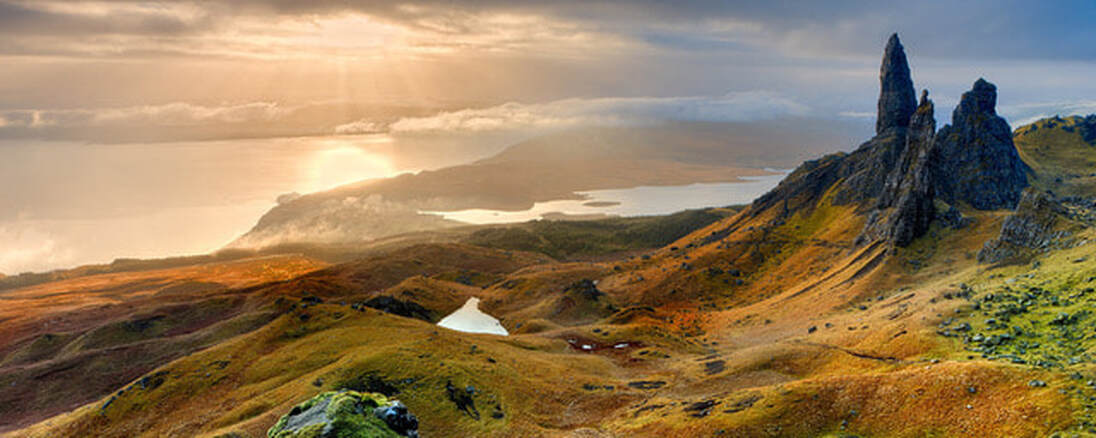
Over the Sea to Skye

 
The Isle of Skye’s unique geology and topography have produced one of the most famously varied and well-studied floras of all Europe. Most visitors only see Skye during the dramatically long days of summer but to appreciate the true pulse of island life you have live through the wild wonder of stormy autumns and magically white winters. Owing to Skye’s proximity to the Atlantic Gulf Stream, it often experiences a climate similar to that of Cornwall. This talk will explore the extremes of environment that gardeners endure in order to grow bountiful produce, emulating the complete self-sufficiency of the ancestral islanders. This well-illustrated presentation offers a panorama of Skye’s landscape and contrasts Island gardens, public and domestic, with the beauty of it’s natural vegetation.

​

Henton Gardening Club website: https://hentongardenclub.weebly.com/
​​


Picture

Our speaker is Henton Gardening Club's Chairman Dr Tim Hooker

Tim has always had a love of the mountains and wilderness and as a student it was his fascination with ferns, mosses and lichens in the Scottish Highlands that led him further afield to do his doctoral studies on an Antarctic island. Remarkably, some of those lichen species are bipolar in distribution and can be found growing on the Isle of Skye where Tim retired after a career in bio-sciences. He retains a passion for research into the natural world. He has authored many academic scientific papers and is currently writing a book with a fellow physicist on the unsettled questions in plasma and astro-physics. He co-organises international physics conferences and the Science and Medical lecture series at the Royal Institution in Bath and he is deeply privileged to be an active member of Henton Gardening Club”.


​​


​Members may join our Facebook group and post questions there, where of course other members may be able to help.
 You are also encouraged to share something interesting in your garden, or if you have any spare plants you are willing to share.


Requirements to join the Zoom meeting
1. Be a full paid Club Member
2. Follow the details which will be sent out to individual members by email.
Anyone may join as a new member at any time.
​Please email Sue Thorne at sue1.thorne@btopenworld.com.

Short Walk through Stoke Woods to the most wonderful view with a bench

 This is our first walk in 2021, a little away from home, all of 5 miles .  Neither of us are fit enough for a proper walk, but a walk to a bench with a view on a glorious day is the best thing. The Bench is right at the top of a large field that leads down to a farm.  The field where sheep were grazing is bordered on three sides by Little Stoke, and Stoke and Big Stoke Woods.  Big Stoke is part of Rodney Stoke National Nature Reserve.


It was hazy and this showed up the the small hills running parallel to the main Mendips which make the 'levels' not so level at this point. The walk down between Stoke and Little Stoke Woods is fairly steep. I was pleased with my walking stick, as my eyes which ought to have been on the path were attracted to the numerous wild flowers open, old rotting branches and leaves litter the floor and with the deep shade of summer not yet cast, the sunlight picked out the violets, wood anemones, primroses, these will be followed by the bluebells.  Their leaves are up and one of two are just coming into flower. 

Primroses (Primula vulgaris)

 Primroses (Primula vulgaris) 


Wood Spurge (Euphorbia amygdaloides) 

Wood Violets - Stoke Wood

On our way back up a shaft of light lit up a patch of leafless inflorescences emmerging from the woodland floor close to some hazels.  Since the information board at the top of the woods indicated that the area does have Bird's Nest Orchids, I thought this may be this flower, but in all the pictures I can find it is shown as yellow.


We might have to go again in a few days time to see what they look like.  I have heard from a fellow member of Somerset Wildlife: Les Cloutman,  that this is Toothwort Lathraca squamaria.   " It is actually fairly common in older woods along the Mendips but is under recorded as it flowers so early in the year. It is a parasite on  several trees, mainly on hazel."


On the walk to the woods, the outcrops of limestone and the gnarled thorn trees shaped by the winds.


I hear that you can expect to see adders, so we shall be on the look out on our walks for these beautiful reptiles.